We believe high school students can change the communities they live in.
We think students our age should take part in their communities, find the problems there and work out how to solve them. Then we turn those solutions into a policy brief for the office that decides, or a proposal for a new law. Policy is what can fundamentally change the places we live.
Youth Civic Engagement Initiative (YCEI) is a student-run organization launched in Northern California in 2024. We help high school students understand the local laws that shape their communities, and take part in changing them. We do it in three ways: learning, caring and engaging.
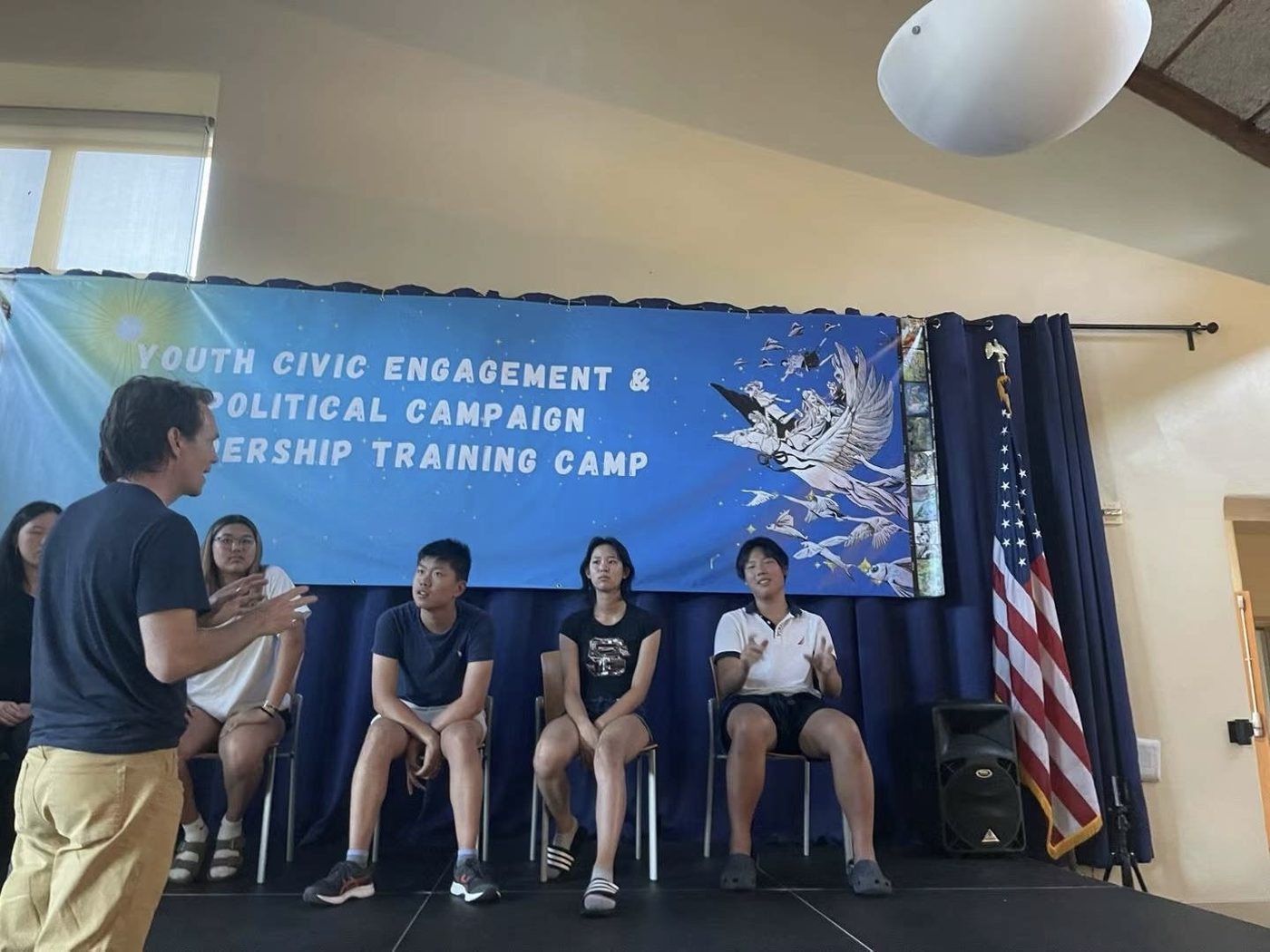
Why we started
Our country is divided, and young people are drifting away from civic life. Many do not follow public affairs, the government or the law, are indifferent to the problems in their own communities, and seldom join the public conversation. After the 2024 election, only 24% of people aged 18 to 34 said they feel part of a group or movement in which people express themselves politically (CIRCLE, January 2025).
David Liu and Nico Gong started YCEI in 2024, as high school students, because they believed young people have a responsibility to take part in civic life and to contribute to their communities. We encourage students to join the conversation and bring the people around them in, we invite government officials to teach us, and we use media and social platforms to spread the word. We start in high school because civic engagement is a habit, and one started early can last a lifetime.
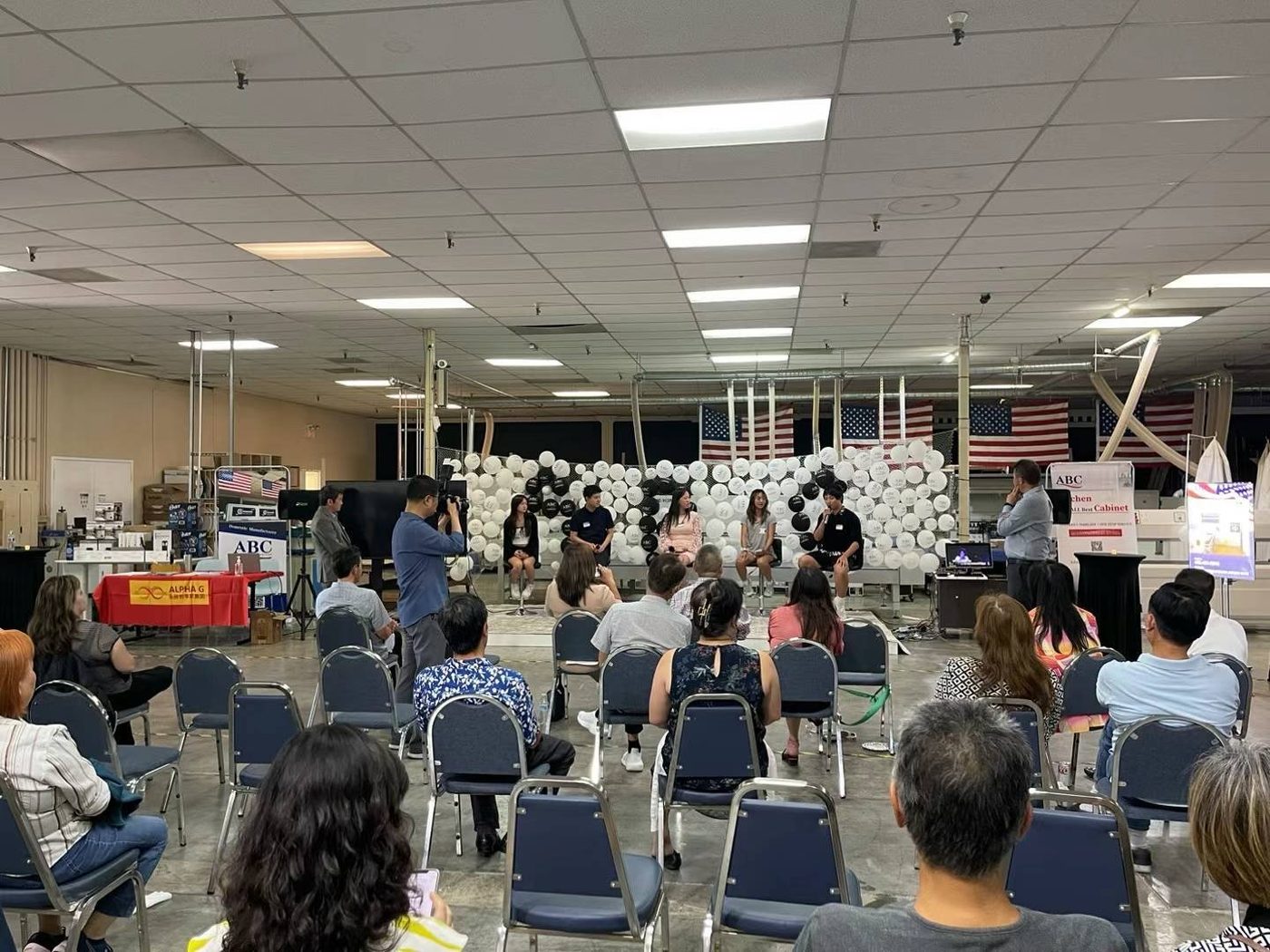
Who we are
YCEI currently has a leadership team of six students, as well as chapters in six states: California, Massachusetts, North Carolina, Texas, Virginia and Washington.
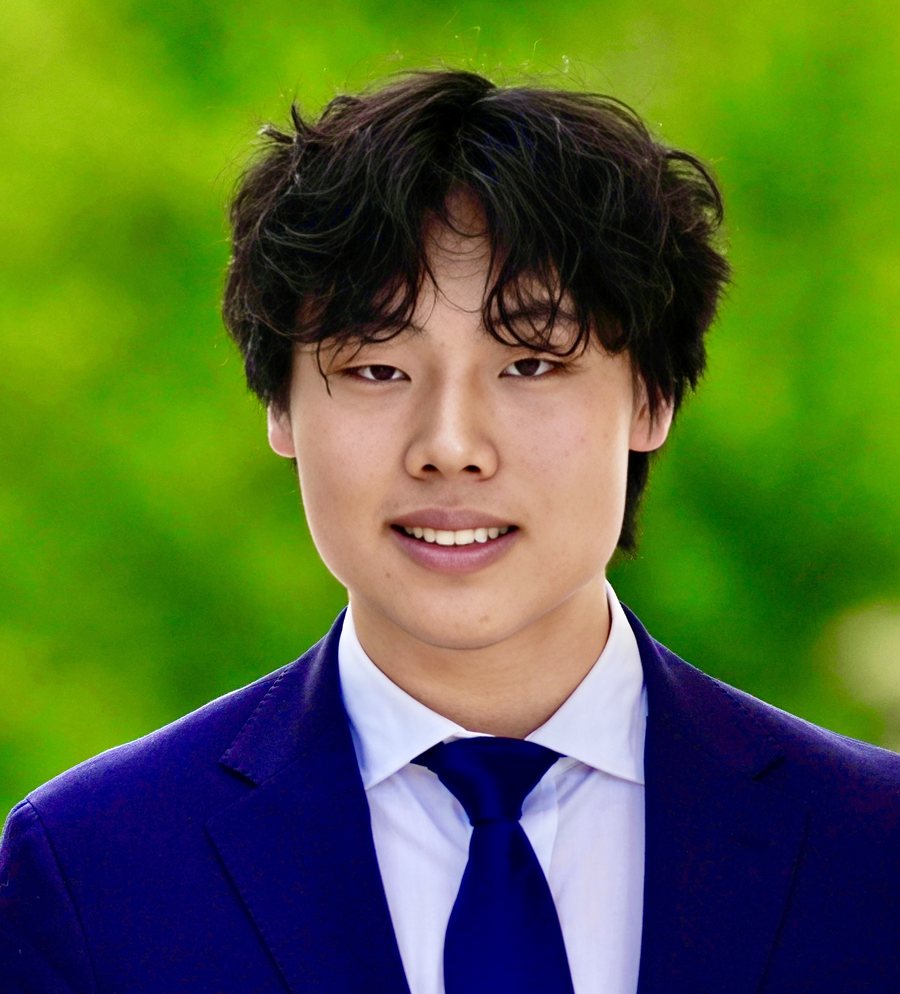
David Liu
Founder and President
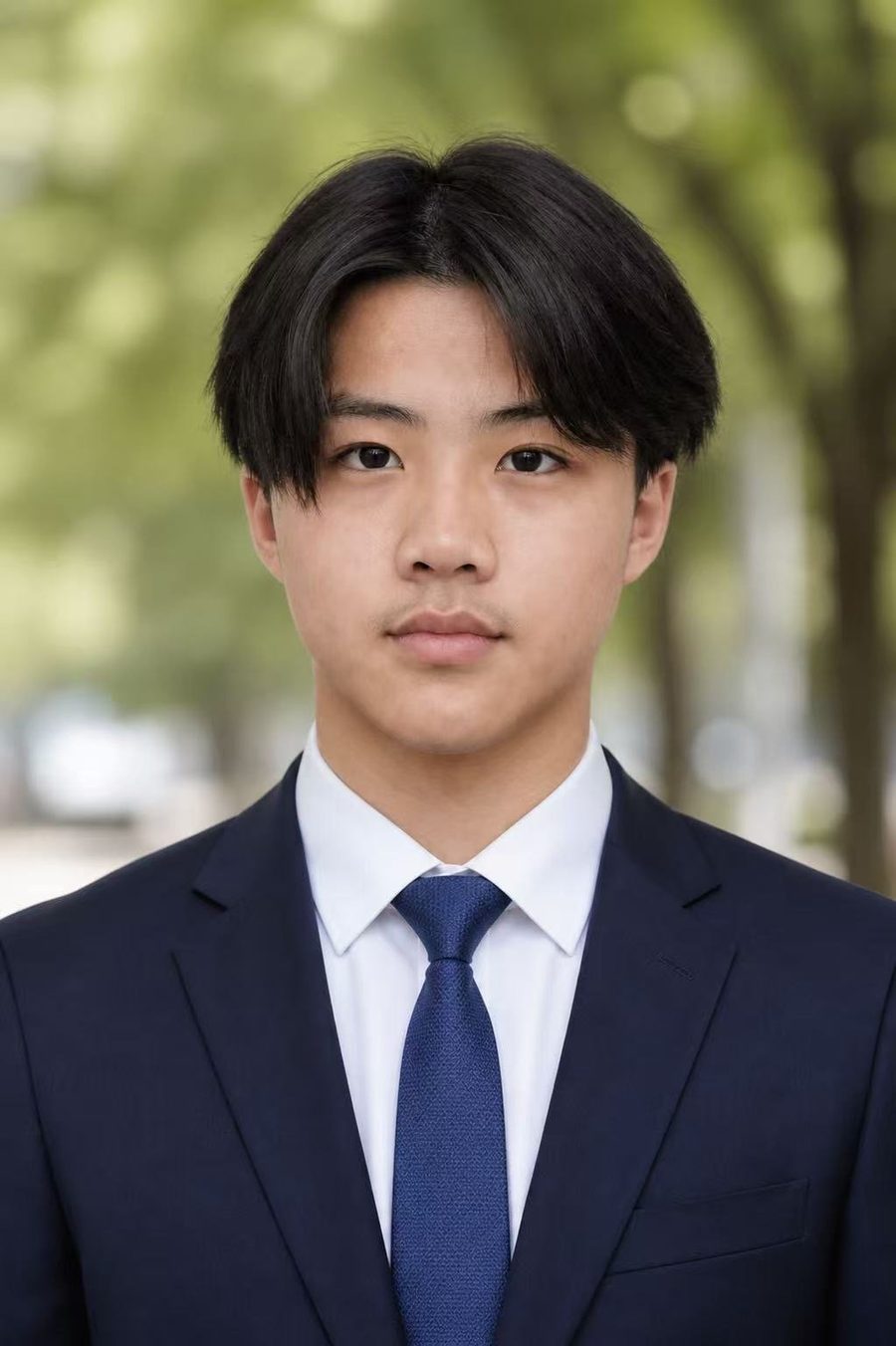
Nico Gong
Co-Founder and Vice President

Evan Barakat
Director of Communications

Sherry Chen
Director of Policy Research

Arjun Kurani
Director of Chapter Development
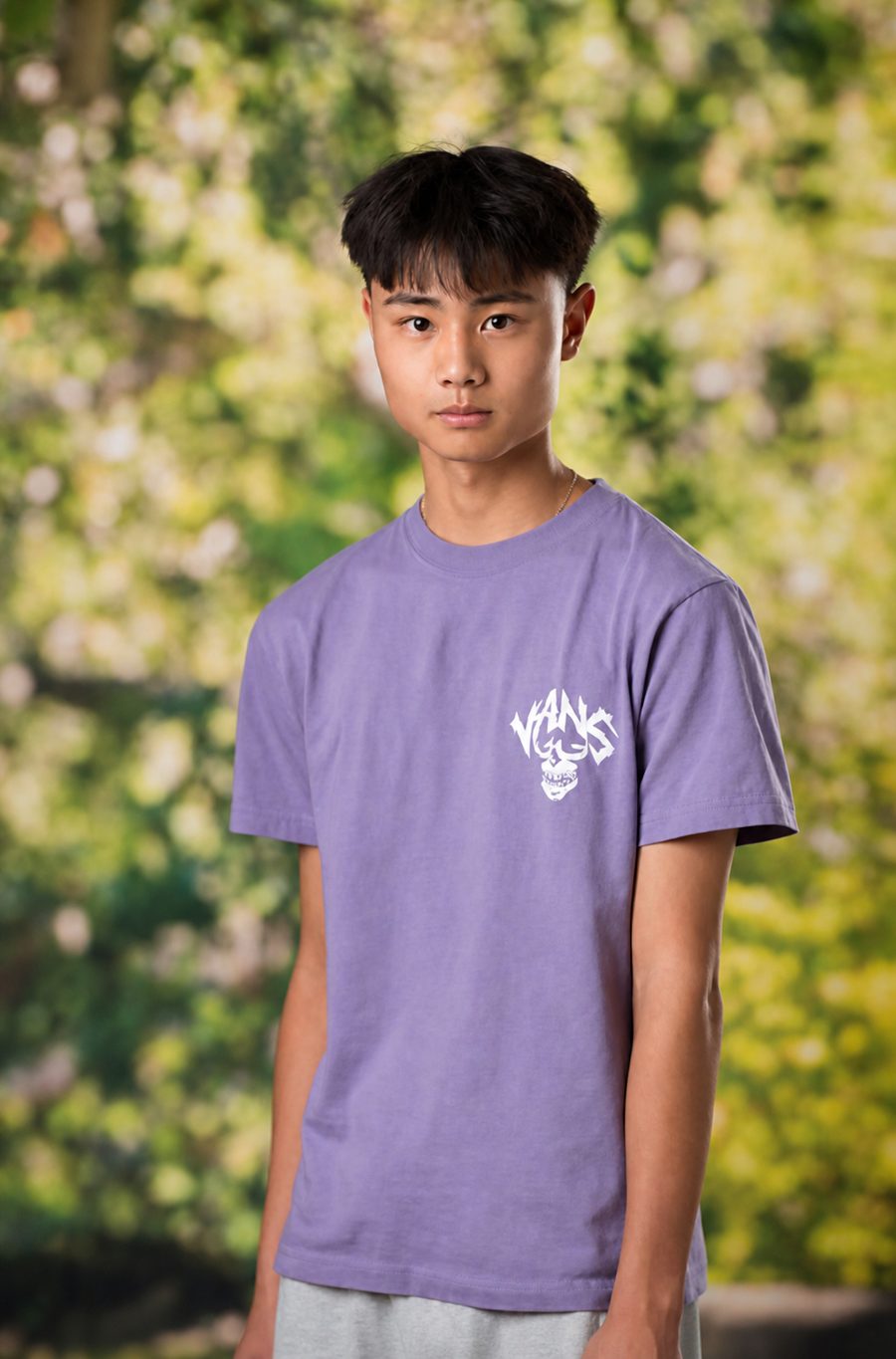
Ethan Chen
Director of Community Outreach
We have more than 150 members across 15 states.
Where our members live
Our members live in 15 states, and six of those states have a chapter.
MembersChapter
- Arizona
- California (chapter)
- Florida
- Georgia
- Illinois
- Iowa
- Maryland
- Massachusetts (chapter)
- Missouri
- New Mexico
- North Carolina (chapter)
- Pennsylvania
- Texas (chapter)
- Virginia (chapter)
- Washington (chapter)
Meet the leadership team, the chapter chairs and our advisors
What we do
We provide a platform for high school students to learn how to do policy advocacy: how to take a problem in their own community and turn it into a proposal that can become policy.
Caring
1. Get involved in your community and find out the issues
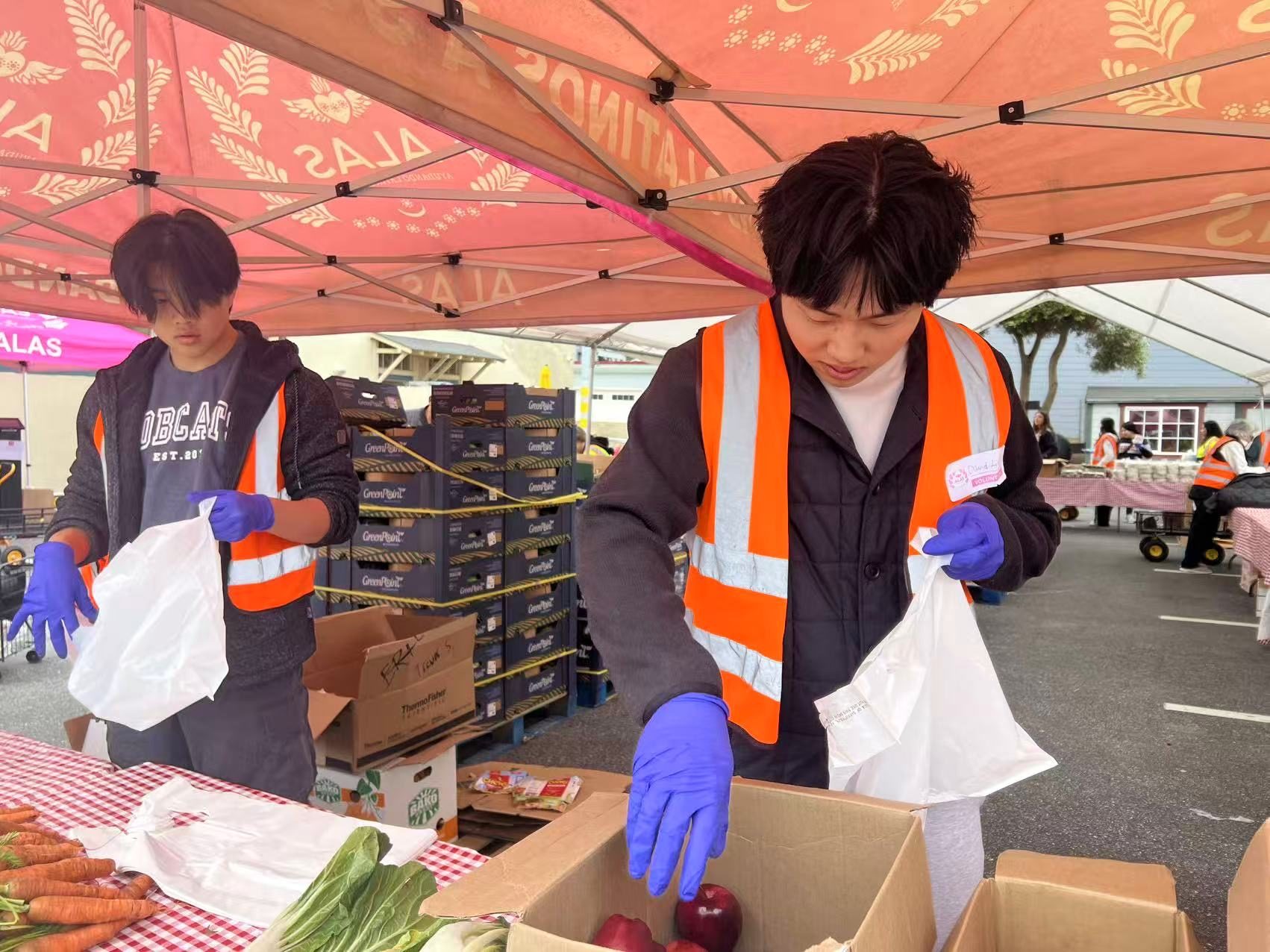
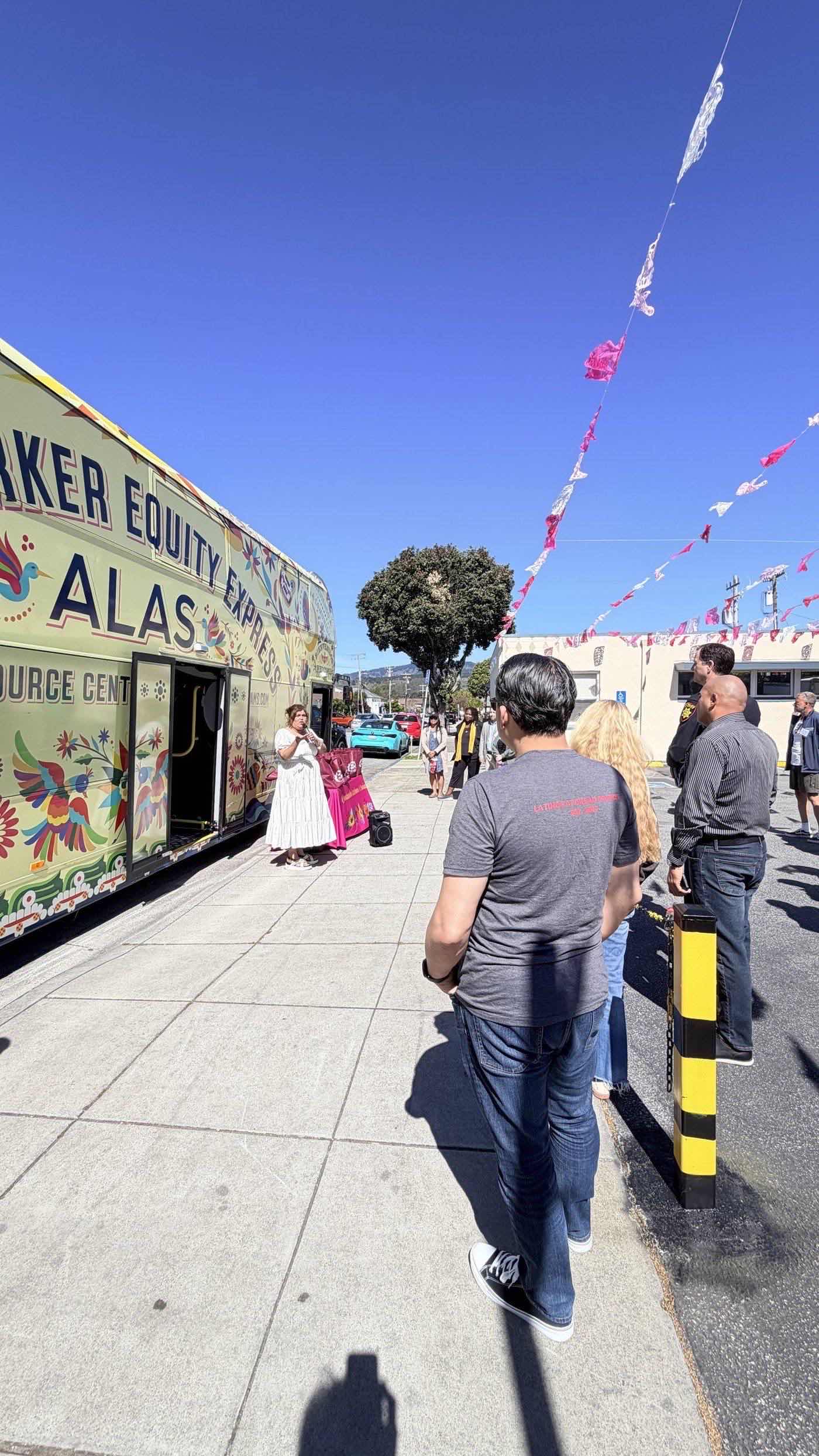
Start by volunteering and doing community service where you live, so you see first-hand what your neighbors face. Then pick one problem you can name, find out what the body that decides it has already done, and talk with the people it affects. Our members have spent a day at a mushroom farm with the Farmworker Health Equity Express and held an evening fundraiser for a new bus.
Learning
2. Learn how to solve the problem and write a policy brief
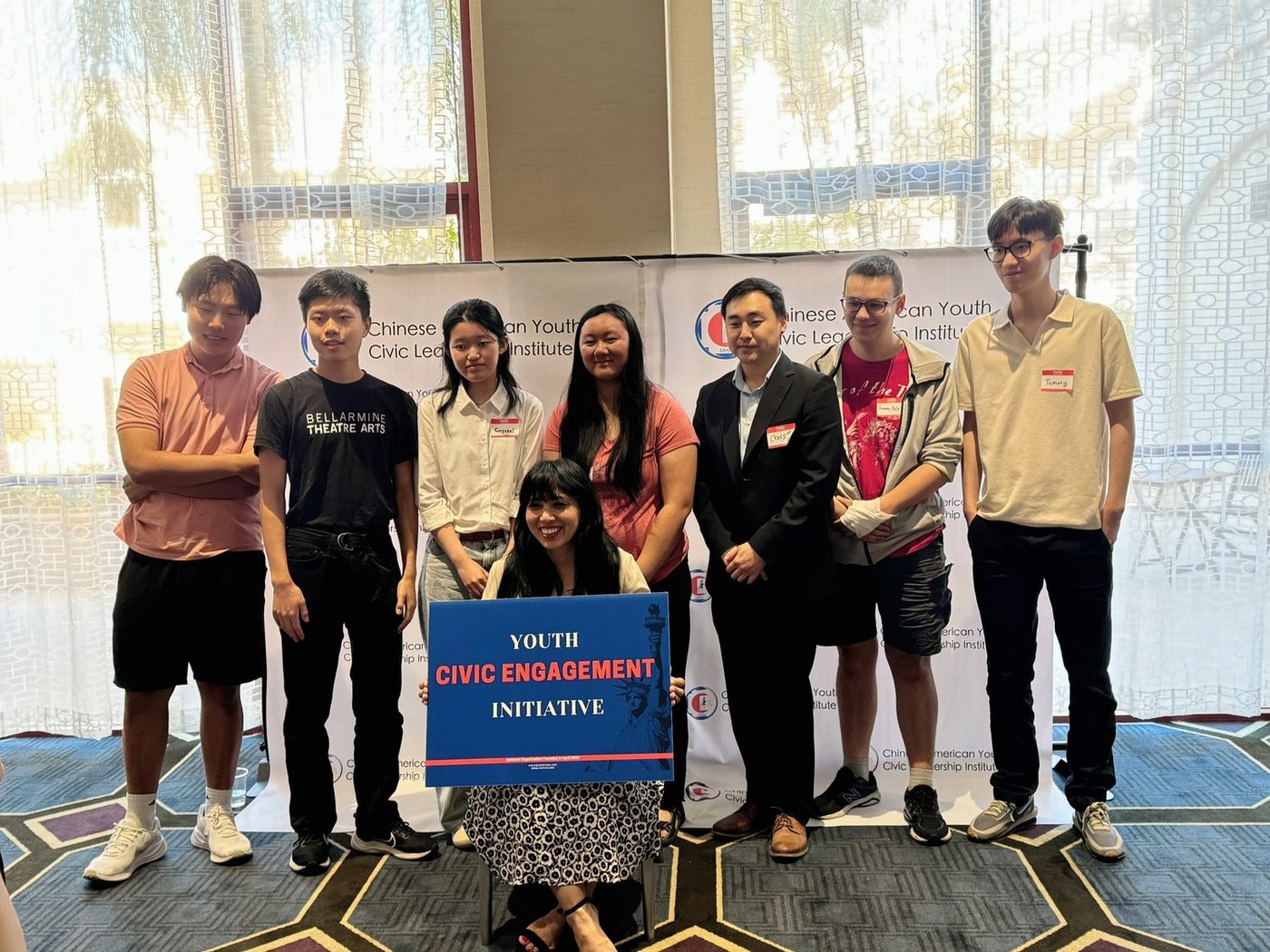
We teach you who decides a problem, how a decision actually gets made, and how to work out a solution. Then you write it up as a policy brief: a short report on what the problem is, who decides it, what you found and what should change, sent to the office that can act on it. A good brief can become the starting point for a new policy or law. We learn from people who do this work, among them our advisors and the officials who speak at our events, and from our founder’s time inside government offices.
Engaging
3. Turn the solution into policy and speak up
A brief or a proposal for a new law only changes something when the people who decide hear it. We teach you how to deliver it: public comment at the meeting, a half hour with a staffer, or a letter into the written record. Then follow up until what was agreed is carried out, because a rule that changes on paper but not in practice has not solved the problem.
Engaging
4. Explain it to everyone
Our series of short videos explains one local bill at a time in plain English: what it does, why it exists, and who is for it and who is against it. The person on camera is a member who lives where the decision lands, so neighbors hear about it from someone they know.

Training and events
We hold training sessions and events for our members, and invite government officials to teach us. Since June 2024, we have hosted eight public events.
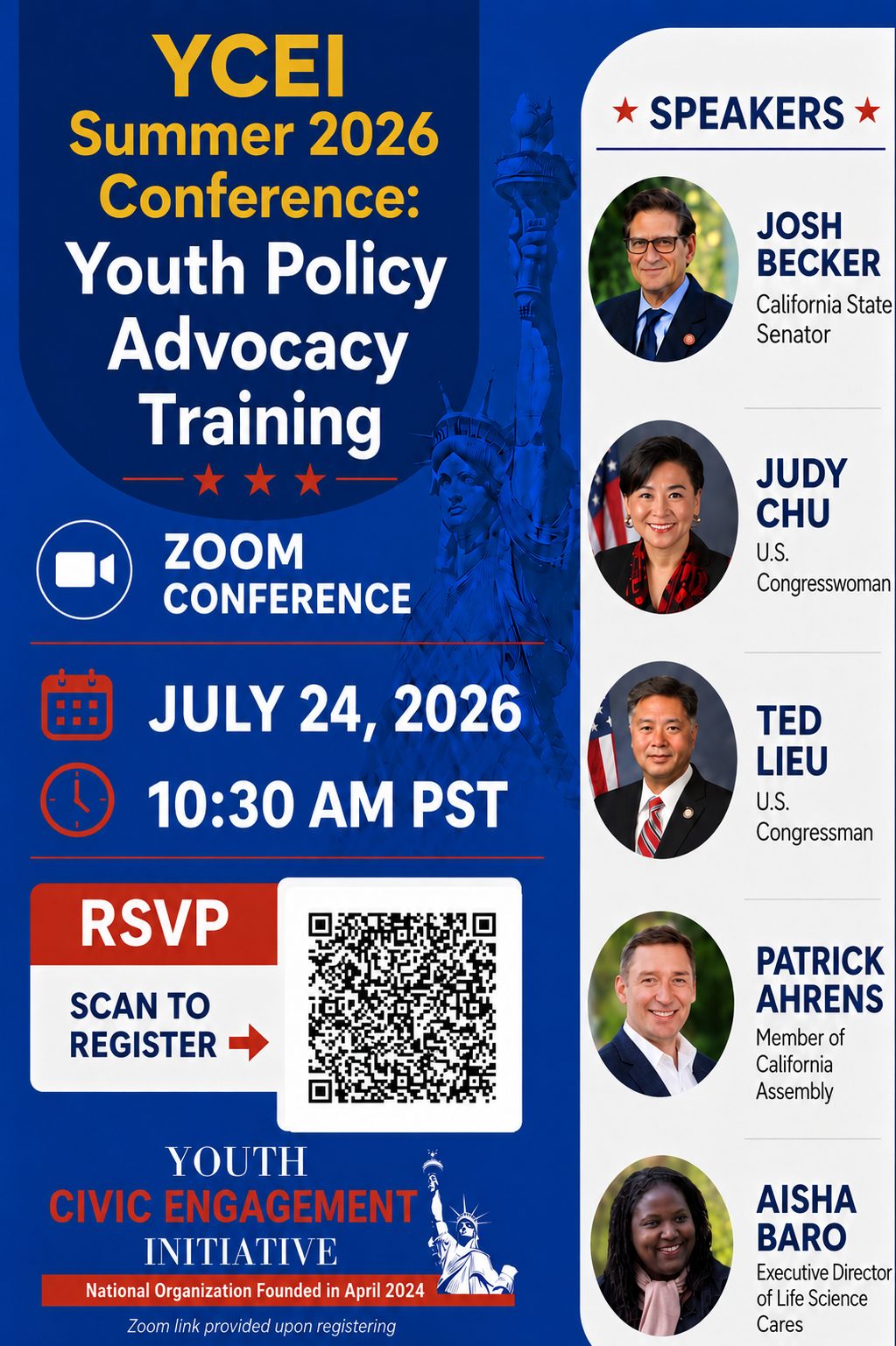
Summer 2026 Conference: Youth Policy Advocacy Training
Our most recent event, on 24 July 2026. Online. 113 people signed up.
Five speakers talked to our members about turning a local problem into policy: State Senator Josh Becker, Congresswoman Judy Chu, Congressman Ted Lieu, Assemblymember Patrick Ahrens, and Aisha Baro of Life Science Cares Bay Area. The whole session was recorded.
The poster, and three moments from the conference
The other three clips are on the events page.
Success story: SB 338 became law on 3 October 2025
One bill our founder worked on from inside a state senator’s office, a health bill for farmworkers, became California law in 2025. We share it as an example of what a high school student can do inside the policy process.
SB 338 creates the Virtual Health Hub for Rural Communities Pilot Program. It lets the State Department of Public Health fund partnerships of community organizations to run virtual health hubs, vehicles or portable facilities fitted with computers, Wi-Fi and exam rooms for telemedicine, in two rural communities chosen on farmworker population and access to care.
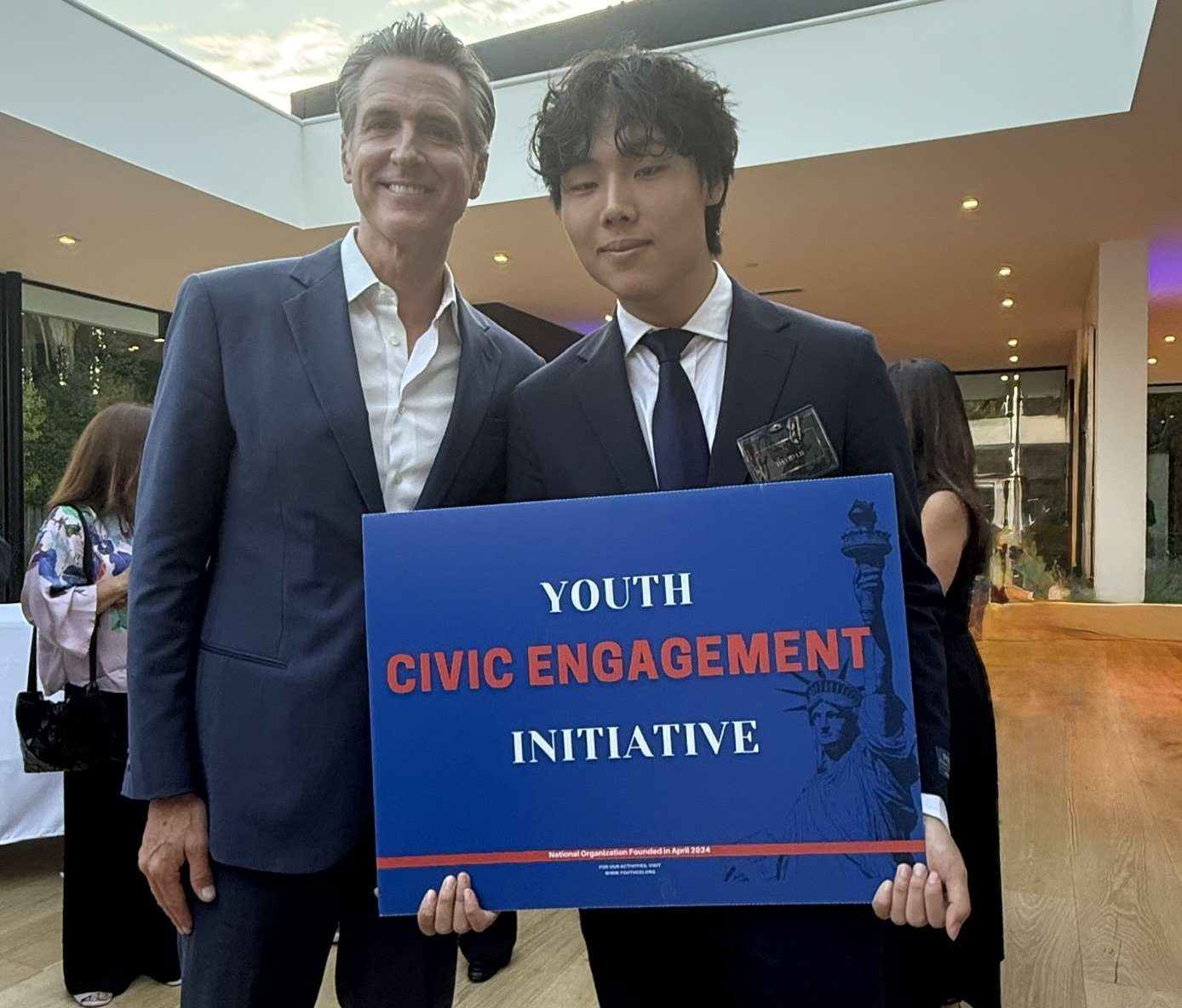
The idea came from Aisha Baro, who runs Life Science Cares Bay Area. She won State Senator Josh Becker’s There Ought to Be a Law contest with it in March 2025, and the bill was modeled on the Farmworker Health Equity Express, a service run by ALAS in Half Moon Bay. Our founder supported the bill in its late stages from inside the senator’s office, wrote to senators and Assembly members, and met the Governor to advocate for the bill. Every vote on the floor was unanimous.
A second bill is being written now.
Join us
We encourage students in different states to start their own chapters, grow their networks among their peers and recruit more high school students to join us.
Start a chapter
Three students and one local problem. That is the whole requirement, as long as you can name the office that decides the problem, and there is no fee.
Film an explainer
Pick a bill in front of your own city council or school board and explain it in about a minute. We will help you find it and read it.
Contact
Write to admin@youthcei.org. We answer questions from students, teachers, families and reporters.
You can also find us on Instagram (@youthcivicengagementinitiative), TikTok (@youthcivicengagem) and YouTube (@YouthCivicEngagementInitiative). A short description of us you can copy, and where each of our figures comes from, are on the press and contact page.